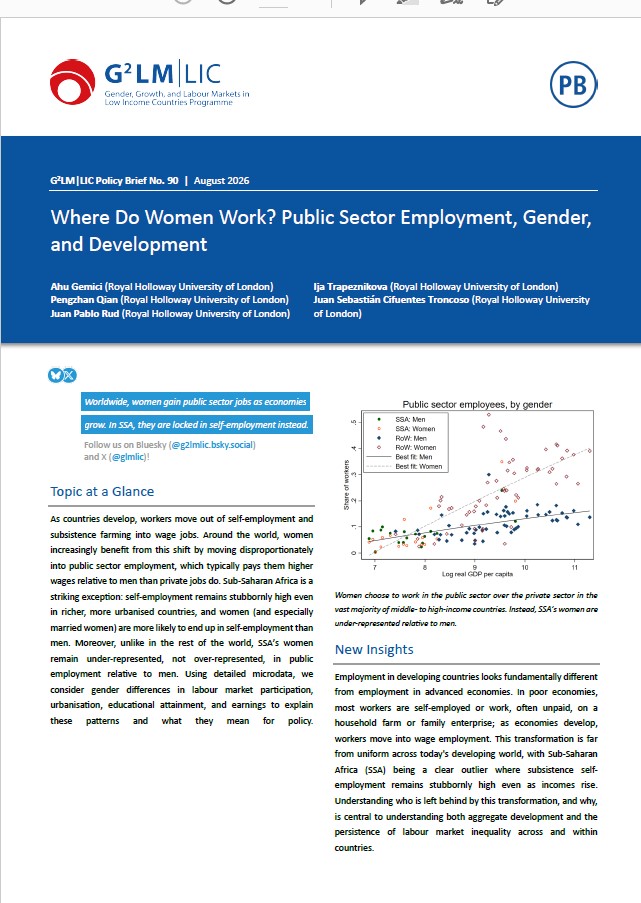
As countries develop, workers move out of self-employment and subsistence farming into wage jobs. Around the world, women increasingly benefit from this shift by moving disproportionately into public sector employment, which typically pays them higher wages relative to men than private jobs do. Sub-Saharan Africa is a striking exception: self-employment remains stubbornly high even in richer, more urbanised countries, and women (and especially married women) are more likely to end up in self-employment than men. Moreover, unlike in the rest of the world, SSA’s women remain under-represented, not over-represented, in public employment relative to men. Using detailed microdata, we consider gender differences in labour market participation, urbanisation, educational attainment, and earnings to explain these patterns and what they mean for policy
Where Do Women Work? Public Sector Employment, Gender, and Development
- Ahu Gemici
- Juan Pablo Rud
- Ija Trapeznikova
- Pengzhan Qian
- Juan Sebastián Cifuentes Troncoso