This project studies how to encourage firms in Delhi’s retail sector to act on workplace safety for women, a setting where formal safeguards are limited and women’s employment is low. We ask the following question: can different messages motivate employers to not just express an interest in sexual harassment prevention training but to actually complete it?
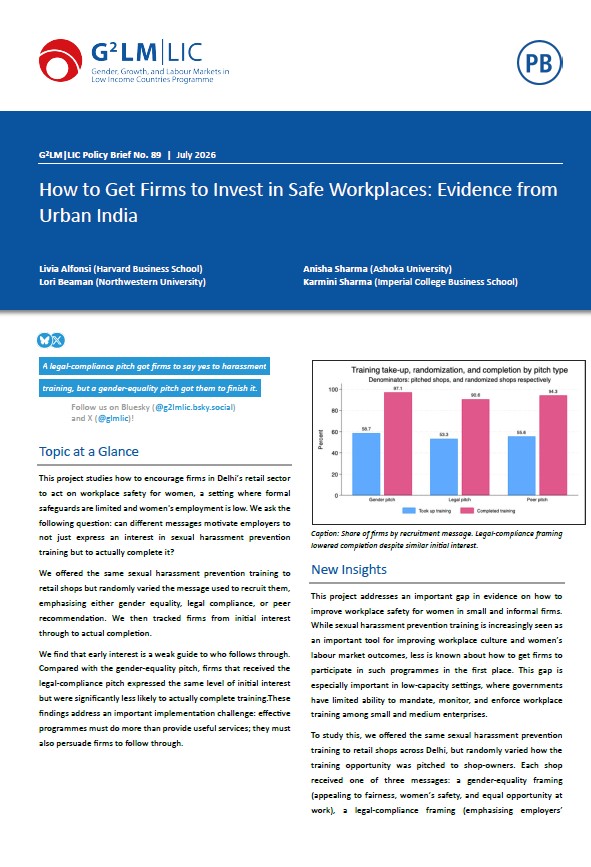
We offered the same sexual harassment prevention training to retail shops but randomly varied the message used to recruit them, emphasising either gender equality, legal compliance, or peer recommendation. We then tracked firms from initial interest through to actual completion.
We find that early interest is a weak guide to who follows through. Compared with the gender-equality pitch, firms that received the legal-compliance pitch expressed the same level of initial interest but were significantly less likely to actually complete training.These findings address an important implementation challenge: effective programmes must do more than provide useful services; they must also persuade firms to follow through.