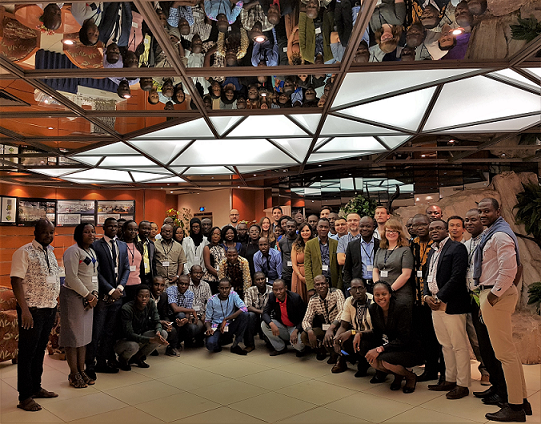
Instructors:
Marco Caliendo (University of Potsdam and IZA)
Christopher Parsons (University of Western Australia and IZA)
Simon Franklin (London School of Economics)
Event Manager: Viola Hartmann
Program
+++ all sessions include 20-30 minutes practical applications +++
(with technical assistance)
Saturday, November 18:
08:00 – 09:00 Registration and Distribution of Learning Materials
Teaching Materials
Stata Licenses, Installation
09:00 – 09:15 Welcome and Introduction (All)
09:15 – 10:30 Simon Franklin (London School of Economics)
“Impact Evaluation”
Theory of Change and Outcome Variable Selection
Potential Outcome Framework
RCT and Other Identification Strategies
10:30 – 11:00 Coffee Break
11:00 – 12:30 Christopher Parsons (University of Western Australia and IZA)
“Difference in Differences”
Motivation and Intuition
Historical Example
Graphical Illustration and Formalization
DiD with Regressions
Practical Advice and Sensitivity Analysis
12:30 – 13:30 Lunch
13:30 – 15:00 Marco Caliendo (University of Potsdam and IZA)
“Matching I”
What Is (Propensity Score) Matching?
Estimating the Propensity Score
Overlap and Common Support
15:00 – 15:30 Coffee Break
15:30 – 17:00 Marco Caliendo (University of Potsdam and IZA)
“Matching II”
Choosing a Matching Algorithm
Assessing the Matching Quality
Effect Estimation
17:00 – 17:30 Day 1 Wrap Up (All)
19:30 Dinner at Restaurant “La Maison du Combattant”, Rue Lecoeur, Abidjan
Sunday, November 19:
08:30 – 10:00 Simon Franklin (London School of Economics)
“Randomized Evaluations I”
When to Randomize and How to Randomize
Data Analysis and Learning from RCTs
Spillovers, Heterogeneous Effects
10:00 – 10:30 Coffee Break
10:30 – 12:00 Simon Franklin (London School of Economics)
“Randomized Evaluations II”
Implementation of RCTs: Balance Tests, Take-up, Attrition, Power
Calculations
Multiple Treatment Arms, External Validity
12:00 – 13:00 Lunch
13:00 – 14:30 Christopher Parsons (University of Western Australia and IZA)
“Regression and Discontinuity Design”
Motivation and Intuition
Examples: RDD in Practice
Sharp RDD: Formalization and Estimation
Robustness Checks
Fuzzy RDD: Intuition and Practice
14:30 – 15:00 Coffee Break
15:00 – 16:00 Practical Implications and Concluding Remarks (All)
Teaching Staff
